Tarot Card Meanings: A Beginner's Guide to the 78 Cards
10 min read
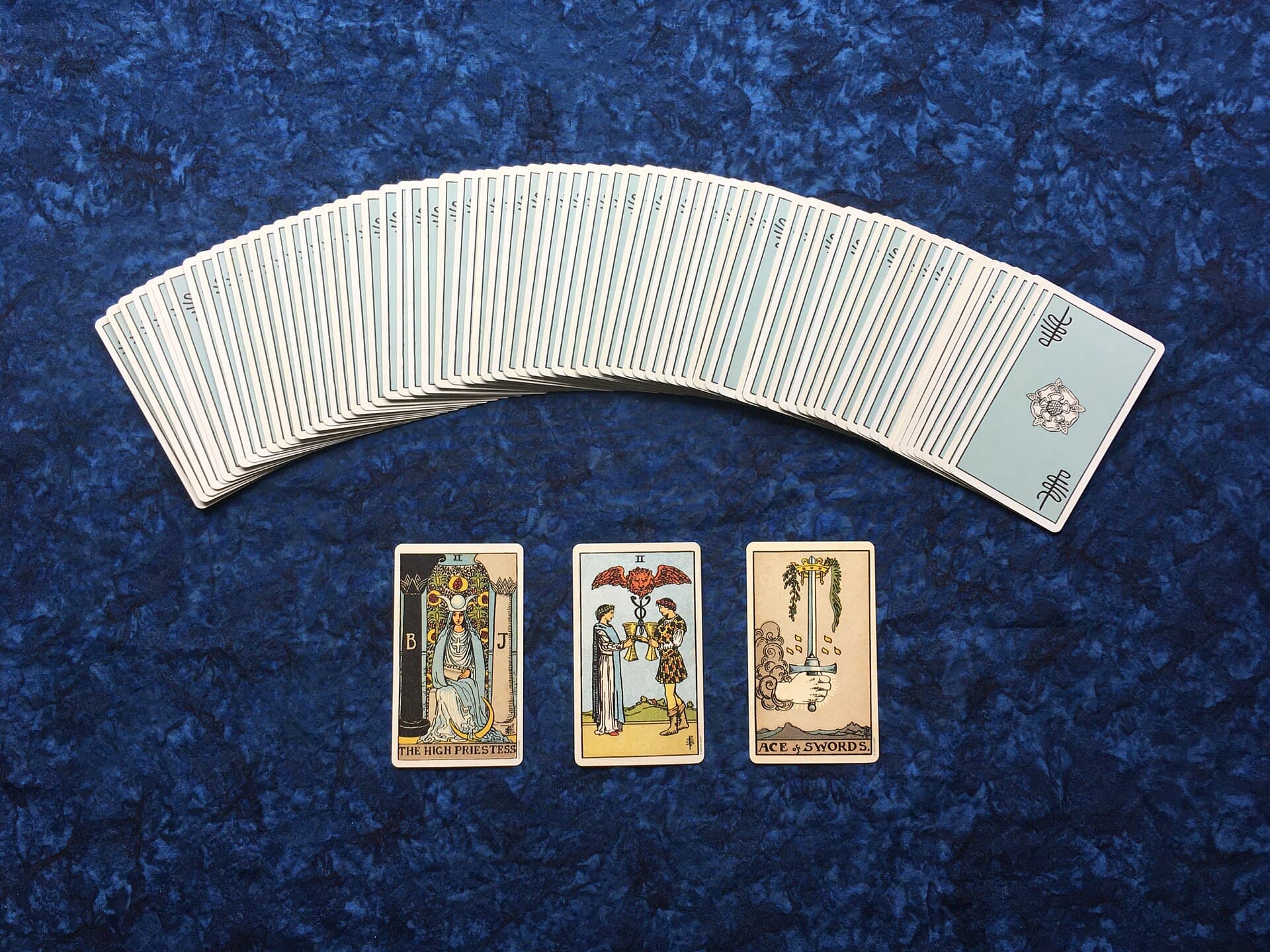
A tarot deck is a set of 78 illustrated cards, and each one carries a symbolic meaning that a reader interprets in the context of your question. The cards do not fix your future; they offer a way of looking at your situation from a new angle.
Loe reads tarot to bring clarity to love, work and life decisions. This guide explains how the deck is organised, what the main cards mean, and how a reader puts them together, so a reading makes more sense when you sit down for one.
Ever looked at a tarot card and had no idea what you were looking at?
- You are curious about tarot but find the symbolism confusing.
- You want to understand what your cards actually mean in a reading.
- You want an honest reader, not a theatrical one.
Loe explains every card that appears in your reading and how it relates to your question, so you leave understanding, not just impressed.
What Tarot Is and Where It Comes From
Tarot cards began in fifteenth-century Italy as a deck for playing card games. It was later, from the eighteenth century onward, that people began using the cards for divination and reflection, attaching symbolic meanings to the images.
The most widely used deck today is the Rider-Waite-Smith deck, first published in 1909. Its illustrations were painted by the artist Pamela Colman Smith, and its scenes for every card, including the numbered Minor Arcana, are a big reason so many readers find it easy to learn from.
Today most people use tarot as a tool for reflection. Rather than announcing what will happen, the cards give you images and prompts to think about your situation and the choices in front of you.
The Major Arcana: 22 Cards of Life Themes
The Major Arcana are the 22 named and numbered cards, from The Fool to The World. They represent big life themes and turning points, and when several appear in a reading it often suggests the situation carries real weight for you.
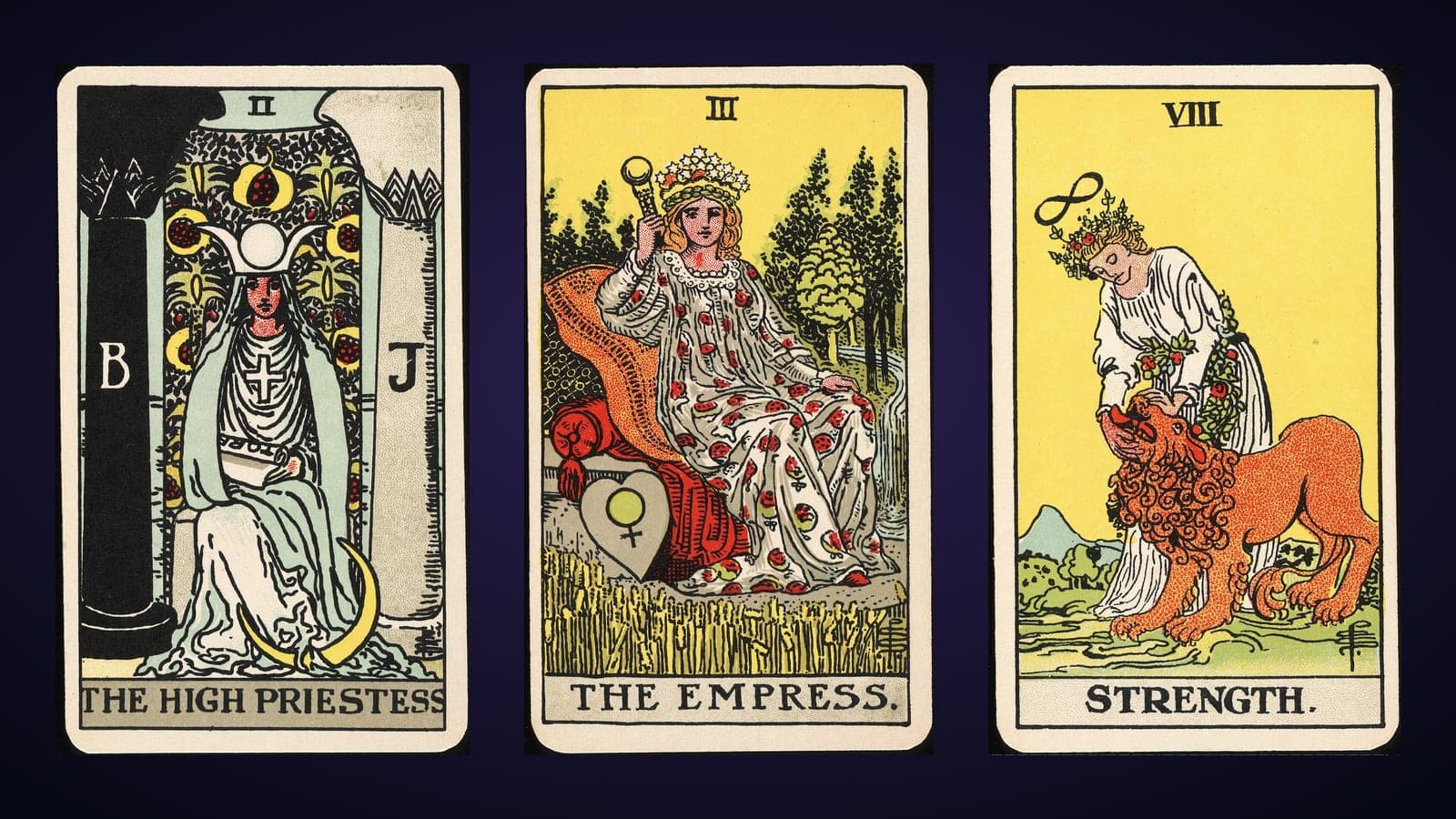
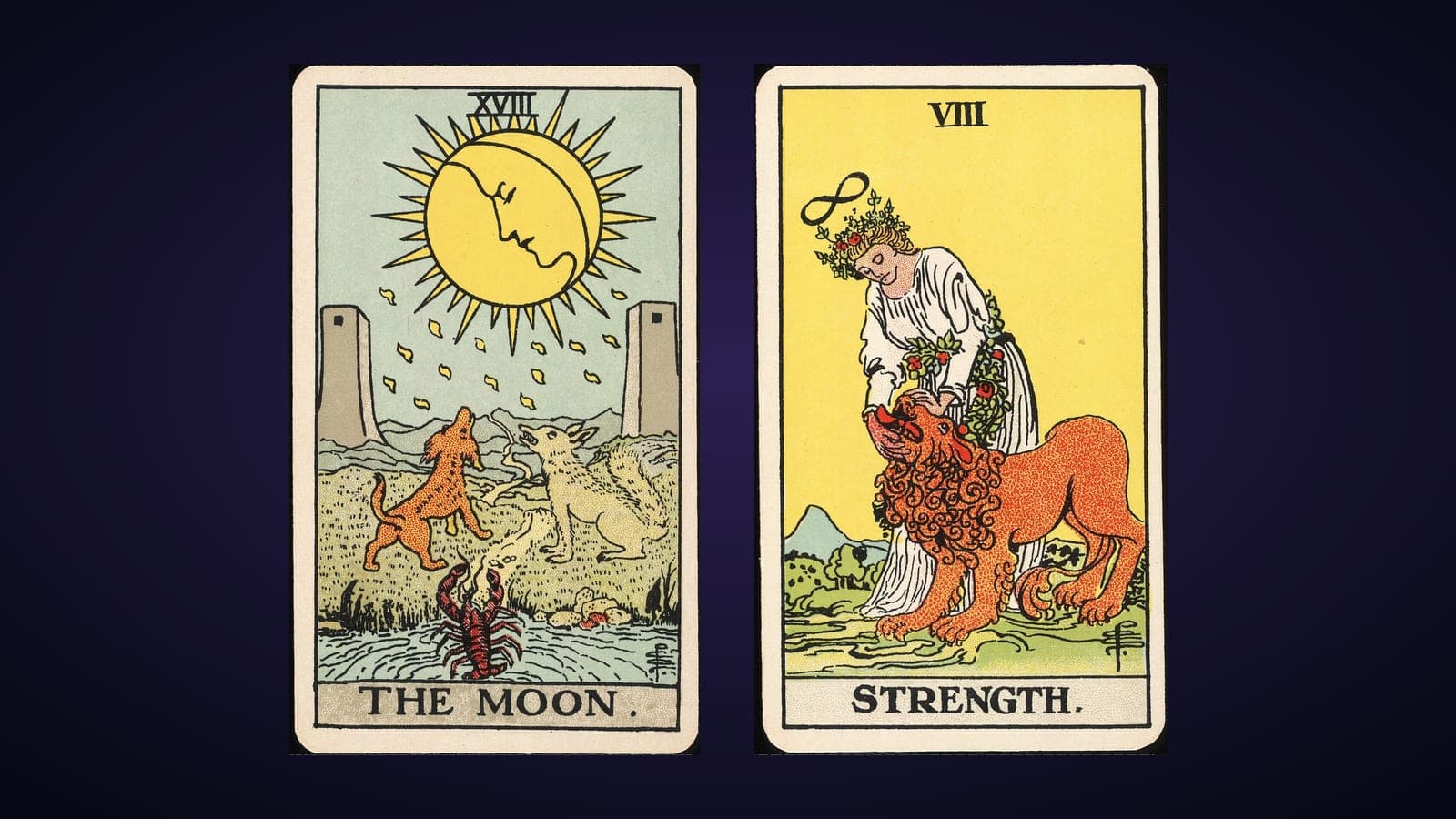
The Fool stands for new beginnings and taking a leap of faith. The Magician is skill and focused will. The High Priestess points to intuition and hidden knowledge, and The Empress to nurturing, creativity and abundance. Strength is quiet courage and patience rather than force.
Further along, The Lovers is about choices and values, The Wheel of Fortune about cycles and change, Death about endings that make way for something new, and The Tower about sudden upheaval that clears away what was unstable. The World closes the sequence with completion and wholeness.
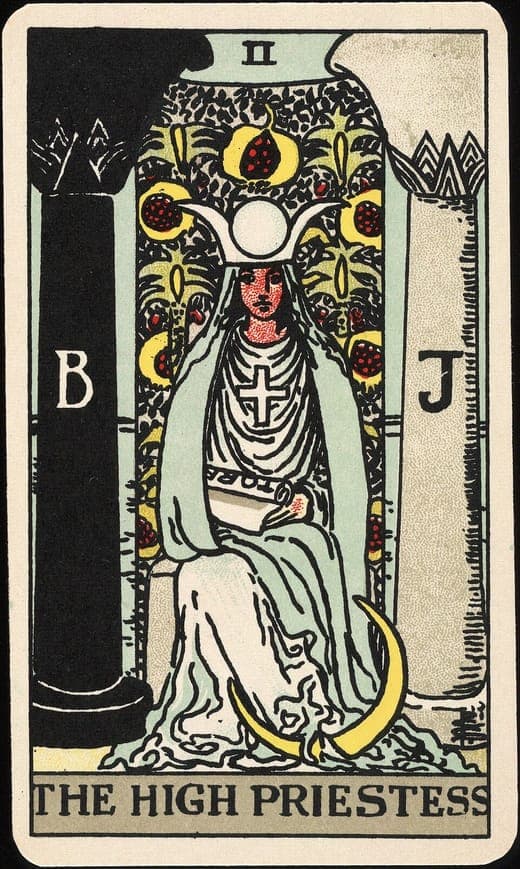
The High Priestess: intuition 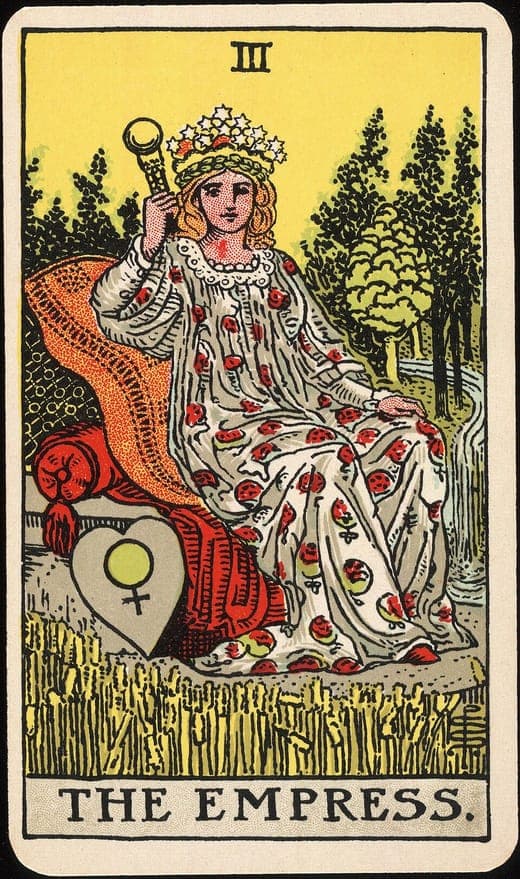
The Empress: nurturing 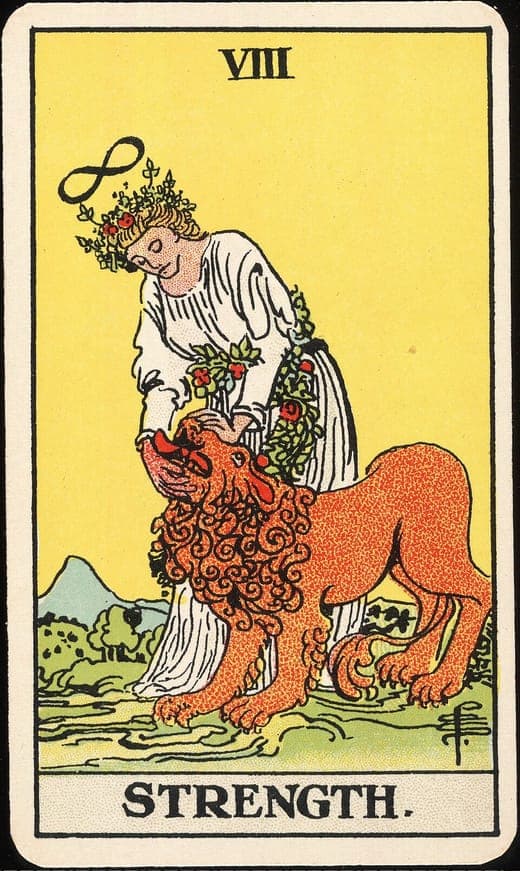
Strength: quiet courage
Key Benefits of Understanding the Major Arcana:
- Big-picture perspective: See which larger life theme is at work in your question.
- Meaningful symbolism: Understand why a card was chosen and what its imagery points to.
- Self-reflection: Use each card as a prompt to ask what it stirs in you.
The Four Suits of the Minor Arcana
The 56 Minor Arcana cards describe the everyday texture of life and are divided into four suits of fourteen cards each. Each suit is linked with an area of experience and, in many traditions, an element.
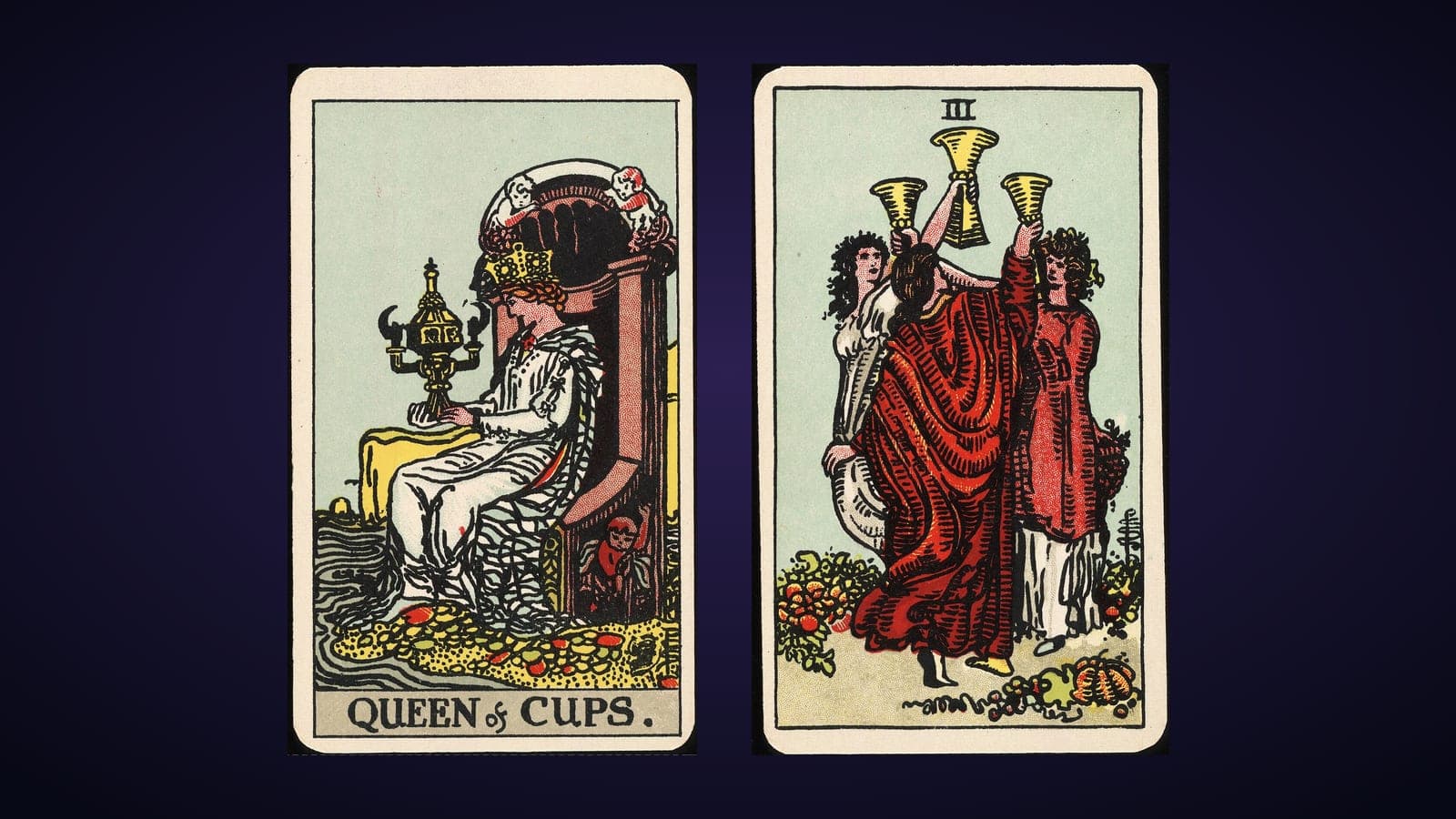
Wands are linked with fire and relate to energy, ambition and creative drive. Cups are linked with water and relate to emotions, relationships and intuition. Swords are linked with air and relate to thoughts, communication and conflict. Pentacles, sometimes called Coins, are linked with earth and relate to work, money, health and the material world.
Within each suit the cards run from the Ace, a fresh seed of that energy, up to the Ten, where the story of that suit reaches its conclusion. Reading the number tells you how far along the situation is.
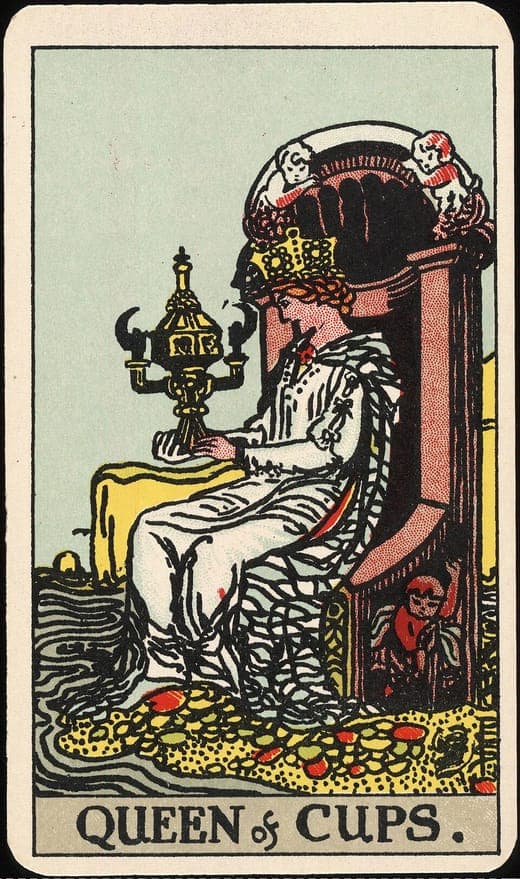
Queen of Cups: emotional maturity 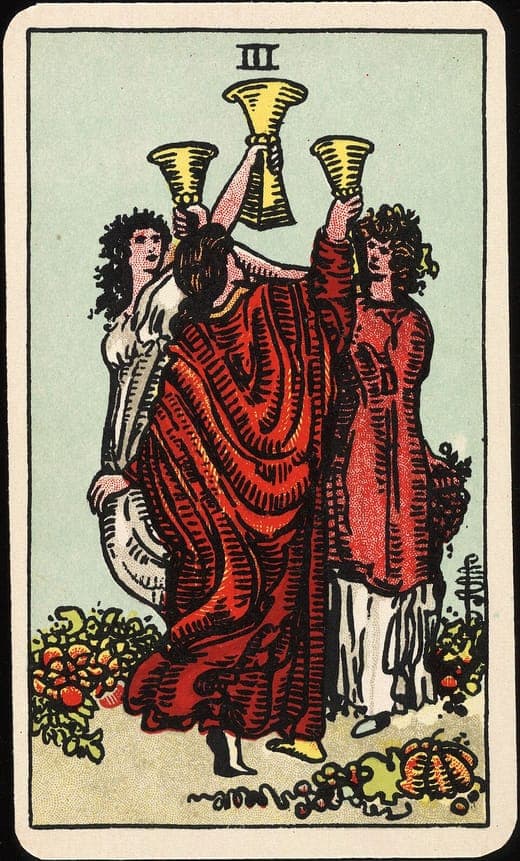
Three of Cups: friendship and joy
Court Cards: Page, Knight, Queen and King
Each suit also has four court cards. They can stand for actual people in your life, for different sides of your own personality, or for a way of approaching a situation.
Pages are curious learners and bearers of news. Knights are energy in motion, acting on their suit's qualities with enthusiasm. Queens embody their suit's qualities inwardly and with maturity. Kings embody them outwardly, with authority and mastery.
Because court cards can represent either a person or a way of behaving, a reader looks to the surrounding cards and your question to decide which meaning fits.
The Cards People Ask About Most
Some cards have a reputation that makes people nervous, so it helps to know what they usually mean. The Tower depicts sudden upheaval, but it is often about the collapse of something that was not stable, clearing space to rebuild. The Devil is about attachment and habit, and asks where you may be feeling stuck or bound.
The Hanged Man is a card of pausing and seeing things from a new angle, not of punishment. The Three of Swords is the card of heartbreak and grief, and the Ten of Swords speaks of a painful ending that, once it has fully happened, leaves nowhere to go but forward.
On the brighter side, the Ace of Cups is a new emotional beginning, such as a fresh connection or a renewed sense of feeling. The Sun is joy, clarity and vitality, and The Star is hope and gentle renewal after difficulty.
Even the hardest cards are rarely the whole message. Loe always reads them alongside the rest of the spread and your question, and focuses on what you can do with what they show.
Upright and Reversed Cards
A card can appear the right way up, called upright, or upside down, called reversed. Not every reader uses reversals, and those who do read them in different ways.
A common approach is to see a reversed card as the same energy blocked, delayed or turned inward. A reversed Sun, for example, does not mean darkness. It may suggest that joy is present but hard to feel right now. Another approach treats a reversal as the opposite meaning or a warning to look more closely.
Whichever approach a reader uses, a reversed card is a nuance to explore rather than a sentence. Loe reads reversals in the context of the whole spread and your question, and will explain the reasoning as they go.
How to Read a Card in Context
No card means one thing in every reading. A reader looks at four things together: the question you asked, the position the card sits in, the cards around it, and any intuitive impression that comes up.
Take The Moon. On its own it is about uncertainty, illusion and the unconscious. Next to a card about clear communication it may simply mean that something is not yet fully understood. Next to a card about endings it may suggest that a decision should wait until things are clearer.
This is also why memorising a list of meanings only gets you part of the way. The skill in tarot is weaving the cards into a story that relates to your real situation, and that is what a good reader does.
If you want to practise on your own, try drawing a single card each morning. Look at the picture before you look up its meaning, and notice what you see and how it makes you feel. Then read the traditional meaning and see where the two overlap. At the end of the day, note whether the card's theme showed up in your day. Over a few weeks this builds a personal relationship with the cards that no list of definitions can give you. Keeping a short journal of what you notice makes the patterns easier to see, and gives you good questions to bring to a reading.
Key Benefits of Reading in Context:
- More relevant answers: The cards are tied back to your actual question, not a generic definition.
- Less fear of "bad" cards: Difficult cards usually point to a challenge worth noticing, not a doom.
- Richer readings: Follow how the cards in a spread speak to each other.
What Tarot Can and Cannot Do
Tarot can help you see a situation more clearly, put words to feelings you were avoiding, and consider options you had not thought of. Many people find that a reading gives them a calmer, more organised way of thinking about a difficult decision.
It cannot give a guaranteed prediction, read another person's private thoughts, or replace professional advice on your health, money or legal matters. Loe is upfront about these limits, because an honest reading is more useful than a dramatic one.
If a card seems to be saying something frightening, that is worth talking through rather than accepting. Loe will explain what the card can and cannot mean, and will never use fear to keep you booking further sessions.
Why Choose Loe for Your Tarot Card Meanings
- Experienced practice: Loe has read tarot for clients on love, work and life direction, and explains each card in plain language.
- Ethical practice: Cards are read honestly. Loe will not use a frightening card to pressure you into another session.
- A personalized approach: Every spread is built around your actual question, not a generic script.
- Ongoing guidance: Loe is available for follow-up readings as your situation develops and new questions come up.
FAQs About Loe's Tarot Card Meanings
How many cards are in a tarot deck?
A standard deck has 78 cards: 22 Major Arcana and 56 Minor Arcana, divided into four suits of 14. The most widely used design is the Rider-Waite-Smith deck, first published in 1909.
Is the Death card a bad sign?
Rarely, and almost never literally. Death in tarot usually points to an ending and a transition, such as a chapter closing so a new one can begin. Loe reads it in the context of your question and will not use it to frighten you.
What does a reversed card mean?
Interpretations vary, but many readers see a reversed card as the same energy delayed, blocked or turned inward. It is a nuance, not a warning. Loe reads reversals in the context of the whole spread.
Can tarot tell me exactly what will happen?
No. Tarot reflects the energies and patterns around your situation and the paths that seem likely, but your choices continue to shape what unfolds. Loe treats a reading as guidance and will be honest about what cards can and cannot show.
Do I need to believe in tarot for a reading to help?
Not necessarily. Many people find that the cards help them articulate what they already feel or notice something they were avoiding. An open mind and a clear question make for the most useful reading.
What is the difference between tarot and oracle cards?
Tarot follows a fixed structure of 78 cards with Major and Minor Arcana and four suits. Oracle decks have no fixed structure, so the number of cards, the themes and the meanings are set by whoever created the deck. Loe works with tarot.
Which tarot deck should a beginner start with?
Many people begin with a Rider-Waite-Smith style deck because every card, including the numbered cards, has a full scene that is easy to read. The best deck is one whose imagery you feel drawn to and can spend time with.
Is it safe to get a tarot reading?
Yes, as long as you treat it as reflection and not a substitute for professional advice. If you are struggling with your health, your finances or your safety, please speak to a qualified professional as well. Loe encourages this and will never discourage it.
Ready to Talk to Loe?
Message Loe on WhatsApp and get guidance tailored to your specific situation.
 WhatsApp Loe about a tarot reading