Tarot Spreads: Three-Card, Celtic Cross and Beyond
6 min read
Part of our complete guide: Tarot Card Meanings: A Beginner's Guide to the 78 Cards
A tarot spread is the layout a reader uses for a reading. Each position in the layout has a meaning, so the same card can say something different depending on where it lands.
Loe chooses a spread to fit your question. Here is how the most common ones work and what each is best suited for.
Not sure whether you need one card, three, or a full ten-card reading?
- You are booking a tarot reading and want to know what to expect.
- You want to understand why a spread has positions and what they mean.
- You want a reading that is the right size for your question.
Loe recommends the spread that suits your situation rather than the longest or most dramatic one.
The Single Card and Three-Card Spreads
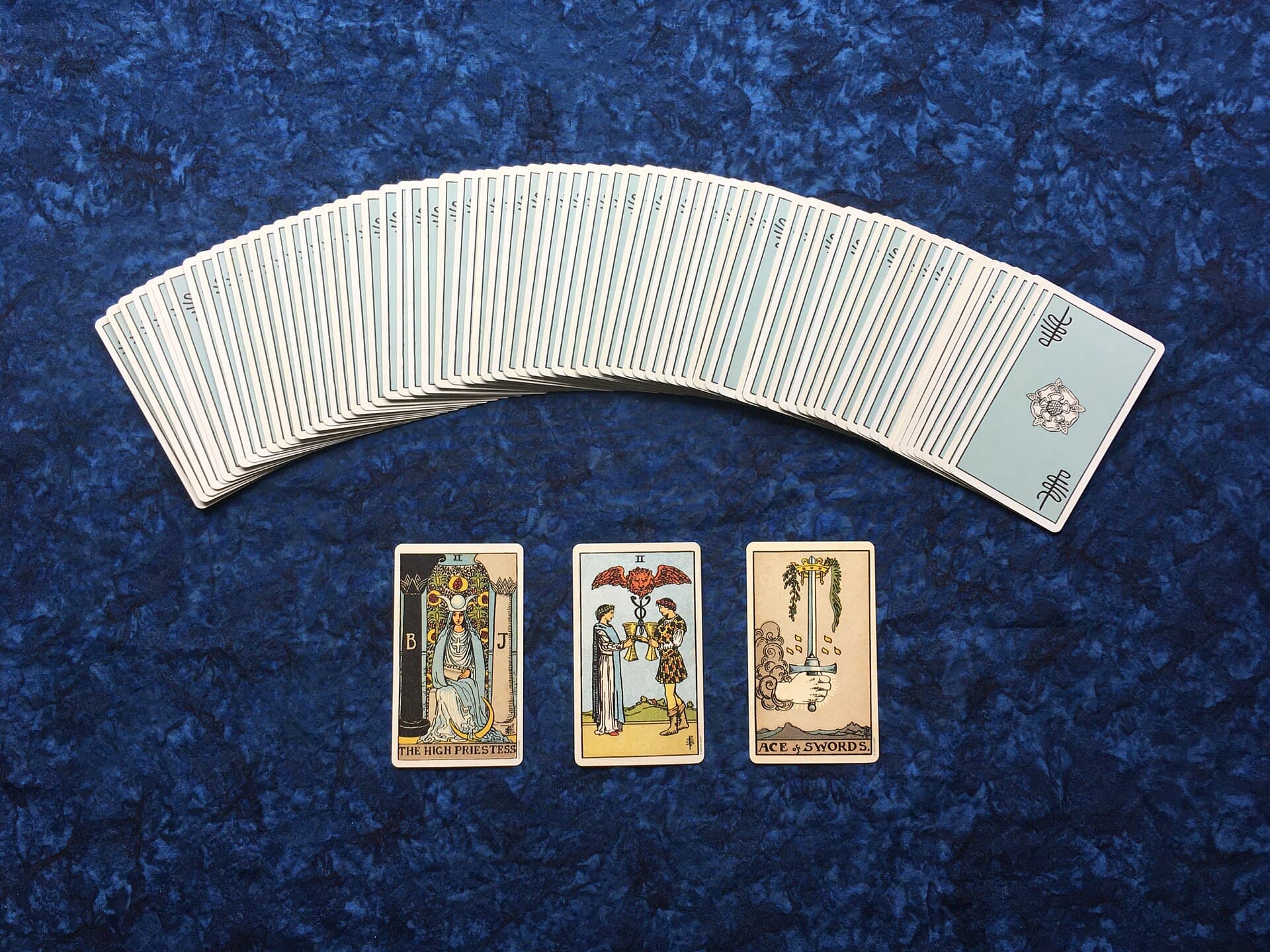
A single card is a good way to reflect on a simple question or a theme for the day. The three-card spread is the most versatile layout. It is often read as past, present and future, or as situation, challenge and advice, giving a compact and balanced picture.
Because three cards are easy to follow, they are a good fit for a first reading or a focused question about love, work or a decision.
Key Benefits of Short Spreads:
- Focus: Keep the reading anchored to one clear question.
- Clarity: Understand each card without being overwhelmed.
- Accessibility: Ideal if you are new to tarot readings.
The Celtic Cross and Other Longer Spreads
The Celtic Cross uses ten cards to explore a situation in depth: what is at the heart of it, what is helping or blocking you, what lies behind you and ahead of you, and your own hopes and fears. It suits complex questions where many factors are at play.
Longer spreads offer more detail, but more cards do not mean more certainty. Loe will suggest the length of a spread that suits your question rather than adding cards for effect.
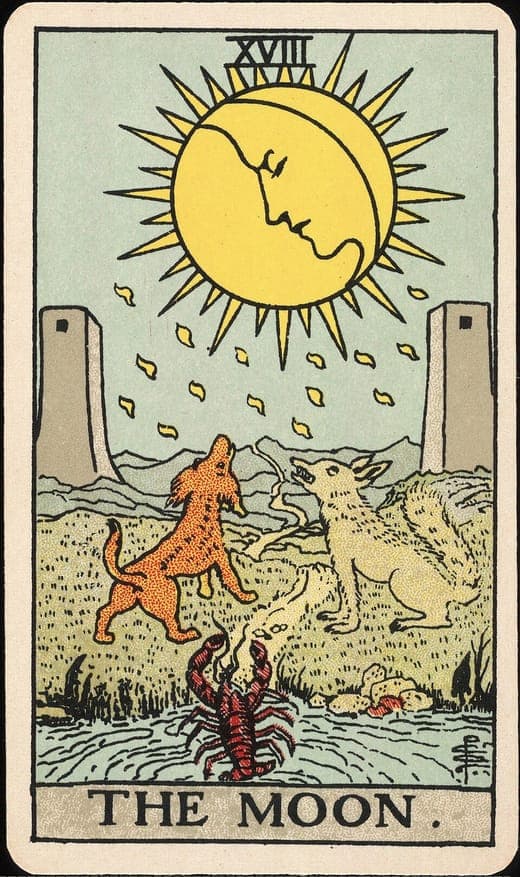
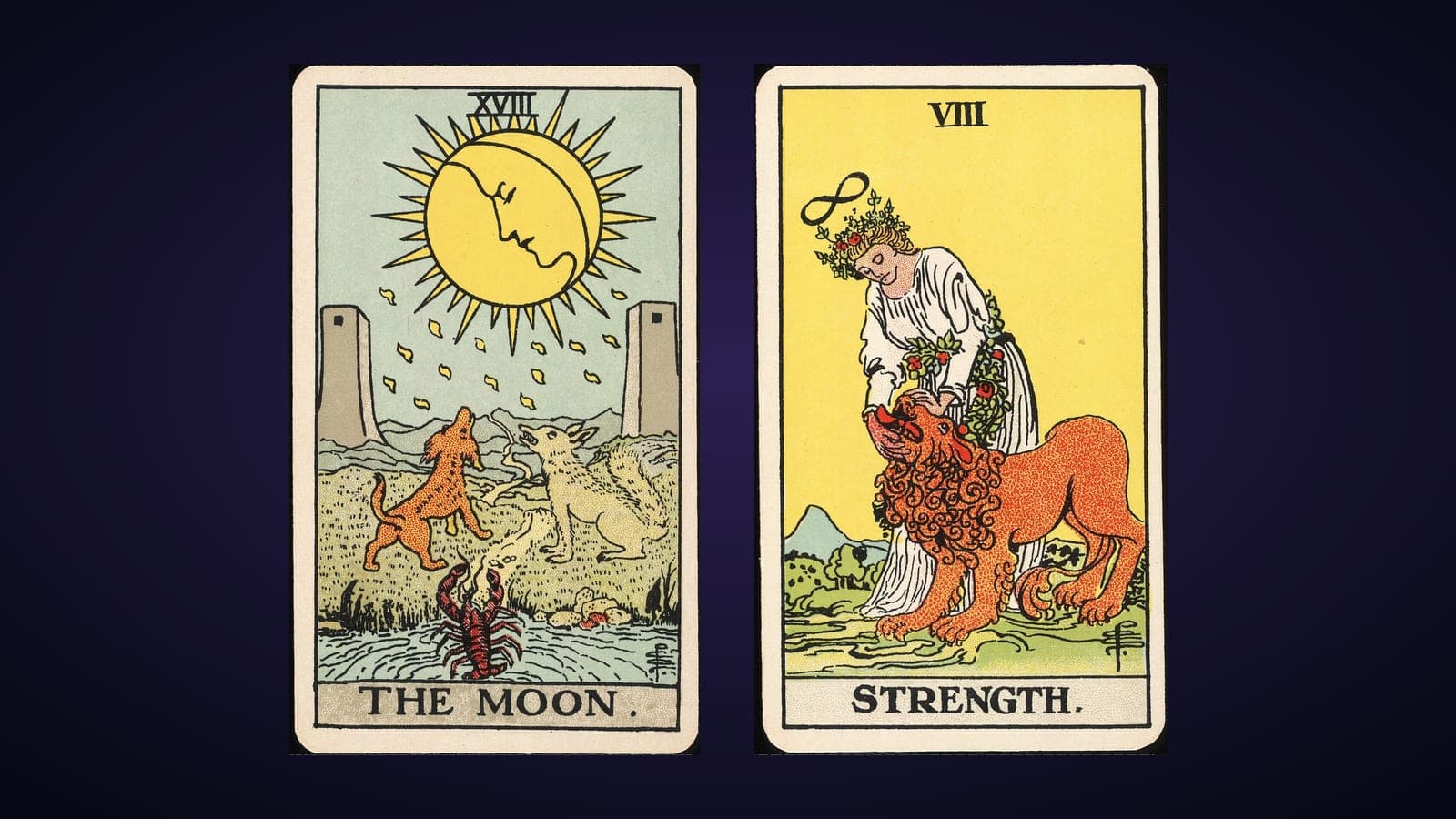
The Moon: what is not yet clear 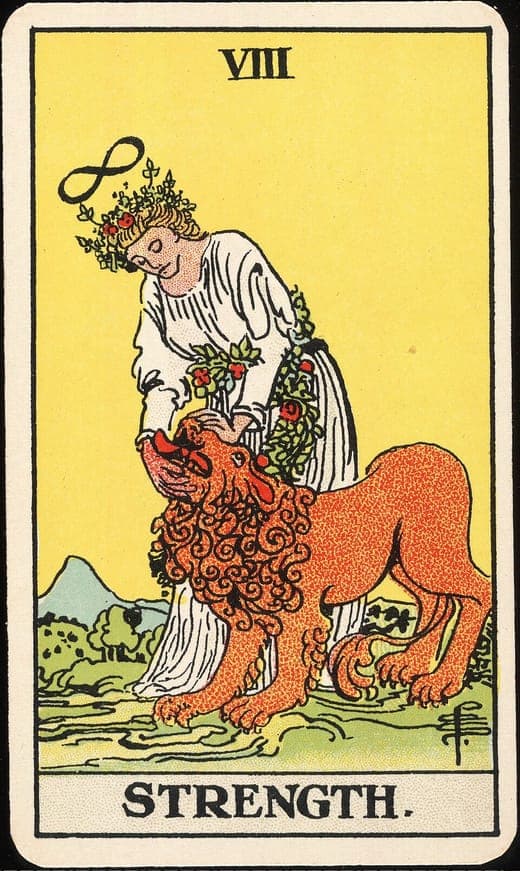
Strength: patience and courage
Key Benefits of Longer Spreads:
- Depth: Explore several layers of a complex situation.
- Context: See how influences, obstacles and hopes interact.
- A fuller narrative: Follow the story the cards tell across the whole layout.
Decision, Career and Year-Ahead Spreads
A decision spread lays out two options side by side, with cards for what each one offers, what each one asks of you, and the advice that sits between them. It does not tell you what to choose. It helps you see what each path really involves.
A career spread might look at your current situation, the obstacles in your way, the strengths you bring, and the next step. A year-ahead spread uses twelve cards, one for each month, plus a summary card, and gives an overview of the themes likely to come up over the coming year.
Loe uses these layouts as prompts for conversation, not as a fixed timetable. The value is in how they help you think about your options and prepare.
Preparing for Your Reading: Questions and Mindset
Before a reading, spend a few minutes working out what you actually want to understand. Open questions work best, such as What do I need to understand about this decision? or What is standing in my way? Questions that begin with Will he or Will I are harder for the cards to answer usefully.
It also helps to come with an open mind rather than a fixed hope. If you go in wanting a particular answer, it is harder to hear what the cards actually say. Take a few slow breaths, and be prepared to sit with an answer that surprises you.
Finally, be clear about how many questions you want to cover. A focused reading on one or two questions is usually more useful than trying to cover your whole life in a single session.
Key Benefits of Preparing a Question:
- Sharper answers: A clear question gives the cards something specific to respond to.
- Less pressure: You are not trying to solve everything at once.
- Better follow-up: You leave with a next step, not just impressions.
Reading a Spread as a Story
Once the cards are down, a good reader looks at the whole layout before zooming in on single cards. Are there many Major Arcana, suggesting a weighty theme? Does one suit dominate, such as several Cups pointing to an emotional situation or several Swords to a mental one? Do the numbers repeat?
Then the cards are read in sequence, as a story that answers your question. After the reading, it helps to write down what stood out and return to it a few days later, when you have had time to notice how it fits your life.
Why Choose Loe for Your Tarot Spreads
- Experienced practice: Loe has read tarot for clients on love, work and life direction, and explains each card in plain language.
- Ethical practice: Cards are read honestly. Loe will not use a frightening card to pressure you into another session.
- A personalized approach: Every spread is built around your actual question, not a generic script.
- Ongoing guidance: Loe is available for follow-up readings as your situation develops and new questions come up.
FAQs About Loe's Tarot Spreads
Which tarot spread is best for beginners?
The three-card spread is a good place to start because it is simple to follow and flexible. It works for questions about love, work or general direction, and gives you a clear structure without overwhelming detail.
What does each card position mean?
It depends on the spread. In a past, present and future layout the positions are time-based. In other layouts they might stand for the situation, the challenge and the advice. Loe explains the positions before reading so you can follow along.
Does a bigger spread give a more accurate answer?
Not necessarily. A longer spread gives more detail, but the clarity of your question matters more than the number of cards. A focused three-card reading can be more useful than a ten-card one on a vague question.
Can I choose the spread I want?
Yes. If you have a preference, tell Loe when you book. Otherwise Loe will recommend the layout that best suits your question.
How long does a tarot reading take?
It varies with the spread and how many questions you have. Short readings can be brief, while a longer spread and discussion take more time. Loe will let you know what to expect when you book.
Can I ask yes or no questions?
You can, and some spreads are built for them, but yes or no answers tend to be less informative than open questions. Loe will often help you reword a yes or no question so the reading gives you something you can use.
Do I shuffle the cards myself?
Practices differ. Some readers invite you to shuffle or cut the deck so that the cards feel connected to your question. Loe will explain how the reading works before you begin and you are free to ask about any part of it.
How many questions can I ask in one reading?
One to three focused questions make for the most useful reading. Trying to cover too many topics at once tends to dilute the answers. If new questions come up, you can follow up in a separate reading.
Ready to Talk to Loe?
Message Loe on WhatsApp and get guidance tailored to your specific situation.
 WhatsApp Loe about a tarot reading